
When was the last time you purchased from an online store and experienced a poor delivery? Perhaps your package arrived damaged, was misplaced, or faced delays. Would you consider buying from that seller again? If your answer is no, you're not alone.
Order fulfillment is a critical component of business operations. Recent research indicates that approximately 85% of online shoppers would avoid reordering from a retailer after a poor delivery experience.
To seamlessly integrate your order fulfillment process, it's essential to understand omnichannel order fulfillment, its significance, the steps involved, and strategies for enhancement.
What is Omnichannel Order Fulfillment?
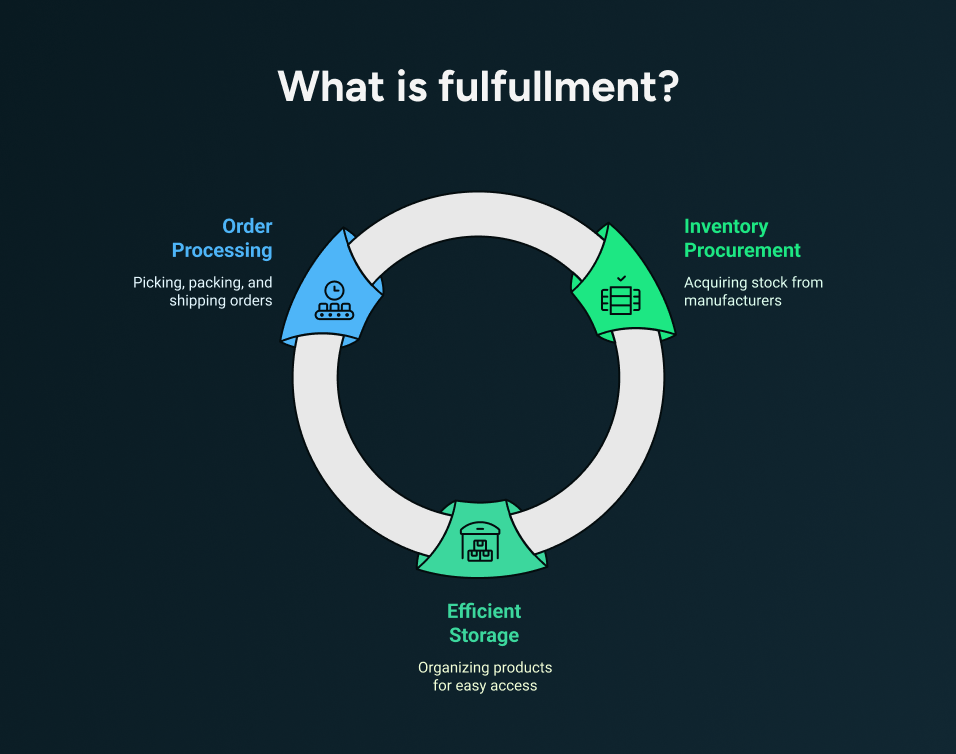
Omnichannel order fulfillment encompasses the processes involved in receiving, packing, and shipping customer orders across multiple sales channels. It covers key activities such as:
- Procuring inventory from manufacturers
- Storing products efficiently
- Picking, packing, and shipping customer orders promptly
Importance of Omnichannel Order Fulfillment
Regardless of whether you're in B2B or D2C sectors, streamlining fulfillment processes is vital. Without sales, there's no business; without order fulfillment, there are no sales.
An effective strategy allows you to:
- Reduce operational costs
- Enhance customer experiences
- Scale your business efficiently
- Save time, enabling focus on expansion
In 2024, global retail e-commerce sales are estimated to exceed $4.1 trillion, with projections reaching over $9.5 trillion by 2030. Statista
This growth underscores the importance of efficient order fulfillment in meeting rising consumer expectations.
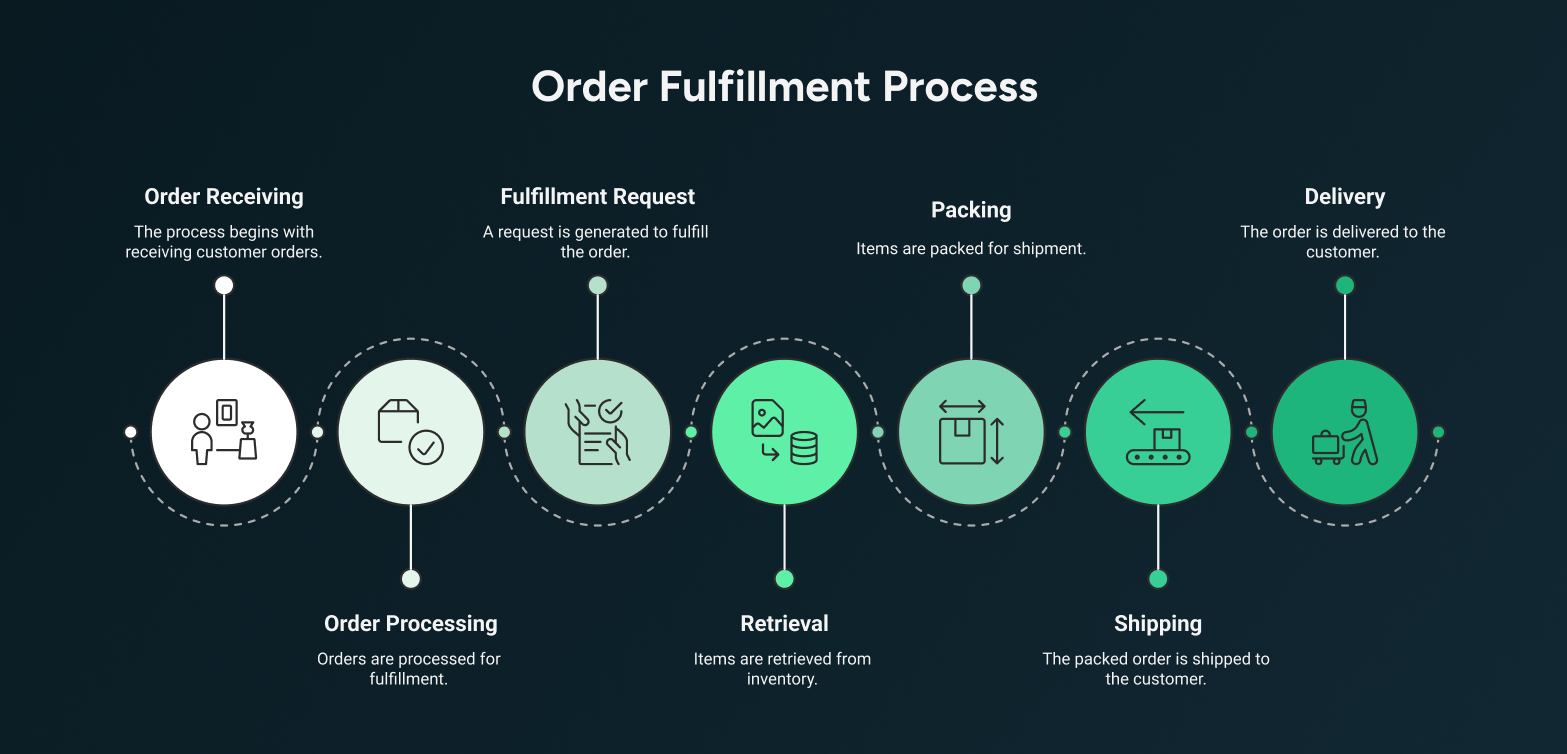
7 Steps in the Order Fulfillment Process
Understanding each step in the omnichannel order fulfillment process is crucial:
- Order Receiving: Orders are received through various channels like websites, marketplaces, calls, or in-person. Inventory is logged digitally, ensuring accurate counts and quality checks.
- Order Processing: Upon order placement, the order management system directs the picking and packing of specified products from available inventory.
- Fulfillment Request: Warehouse or fulfillment centers receive order details promptly.
- Retrieval: Staff or automated systems pick items according to order specifications.
- Packing: Selected items are packed using appropriate materials to optimize shipping dimensions and protect products.
- Shipping: Orders are shipped to customers, who can track their packages in real time.
- Delivery: Packages arrive at the customer's specified address.
Enhancing the Order Fulfillment Process
Improving your order fulfillment process can lead to significant benefits:
- Develop a Robust Backup Strategy: External factors like misplaced packages or adverse weather can disrupt deliveries. A solid backup plan ensures timely resolutions.
- Leverage Data for Demand Forecasting: Analyzing past sales data helps anticipate consumer demand, reducing stockouts and overstock situations.
- Automate Processes Where Possible: Automation minimizes human errors, streamlines operations, and accelerates order processing.
- Maintain Transparency with Customers: Keeping customers informed about their order status builds trust and reduces inquiries.
Best Practices in Order Fulfillment
Implementing the following practices can optimize your fulfillment process:
- Organize Your Warehouse: Efficient layout reduces picking times and enhances productivity.
- Enhance Data Visibility: Real-time insights into inventory and operations facilitate informed decision-making.
- Streamline Shipping and Logistics: Partnering with reliable carriers and optimizing shipping routes reduce costs and delivery times.
- Embrace Automation: Technologies like barcode scanners and automated sorting systems improve accuracy and efficiency.
Improving Order Fulfillment with PostEx Order Management System
To address the complexities of omnichannel order fulfillment, consider integrating the PostEx Order Management System (OMS). This AI-driven platform offers:
- AI-Driven Automation: Verifies orders and routes them to the best-performing delivery companies, ensuring timely deliveries.
- System Automation: Updates order statuses in real-time, assigns delivery partners based on predefined rules, and generates shipping labels automatically.
- Return Management: Handles product returns with automated approvals, manages reverse logistics, and tracks returns in real time.
By adopting PostEx OMS, retailers can streamline their fulfillment processes, reduce errors, and enhance customer satisfaction.
Strategies to Increase Order Fulfillment Accuracy
Enhancing order accuracy is pivotal for customer retention. Consider the following strategies:
- Set Clear Goals: Define measurable targets for order accuracy and monitor performance regularly.
- Optimize Inventory Management: Ensure real-time inventory tracking to prevent stock discrepancies.
- Organize Picking and Packing Processes: Standardize procedures to minimize errors during order assembly.
- Implement Advanced Fulfillment Technology: Utilize systems like PostEx OMS to automate and monitor fulfillment activities.
Conclusion
Efficient omnichannel order fulfillment is a cornerstone of successful retail operations. By understanding its importance, following best practices, and leveraging advanced systems like PostEx OMS, retailers can meet growing consumer demands, reduce operational costs, and foster customer loyalty. Embracing these strategies positions businesses to thrive in the dynamic e-commerce environment.