
Expanding business across multiple channels can be hard for retailers. But with the right tools and software like a multichannel order management system, you can make this transition easy. Read how multichannel OMS can digitally transform businesses and help them grow.
What is Multichannel Order Management?
The continuous process of managing all your inventory and sales orders of multiple channels on a platform is referred to as multichannel order management. There was a time when it was done manually but modern retailers are using digital solutions and systems for multi-channel order management.
A multichannel order management system streamlines the process across different online channels and physical locations. It assists a multichannel order manager in aggregating inventory from all physical locations and syncing it to different online channels. You can get orders from multiple channels in one place and can assign orders to different locations based on inventory availability. Thus, you get an all-in-one solution for managing orders and inventory across multiple channels including your website and marketplaces.
Multichannel Order Management Market Growth
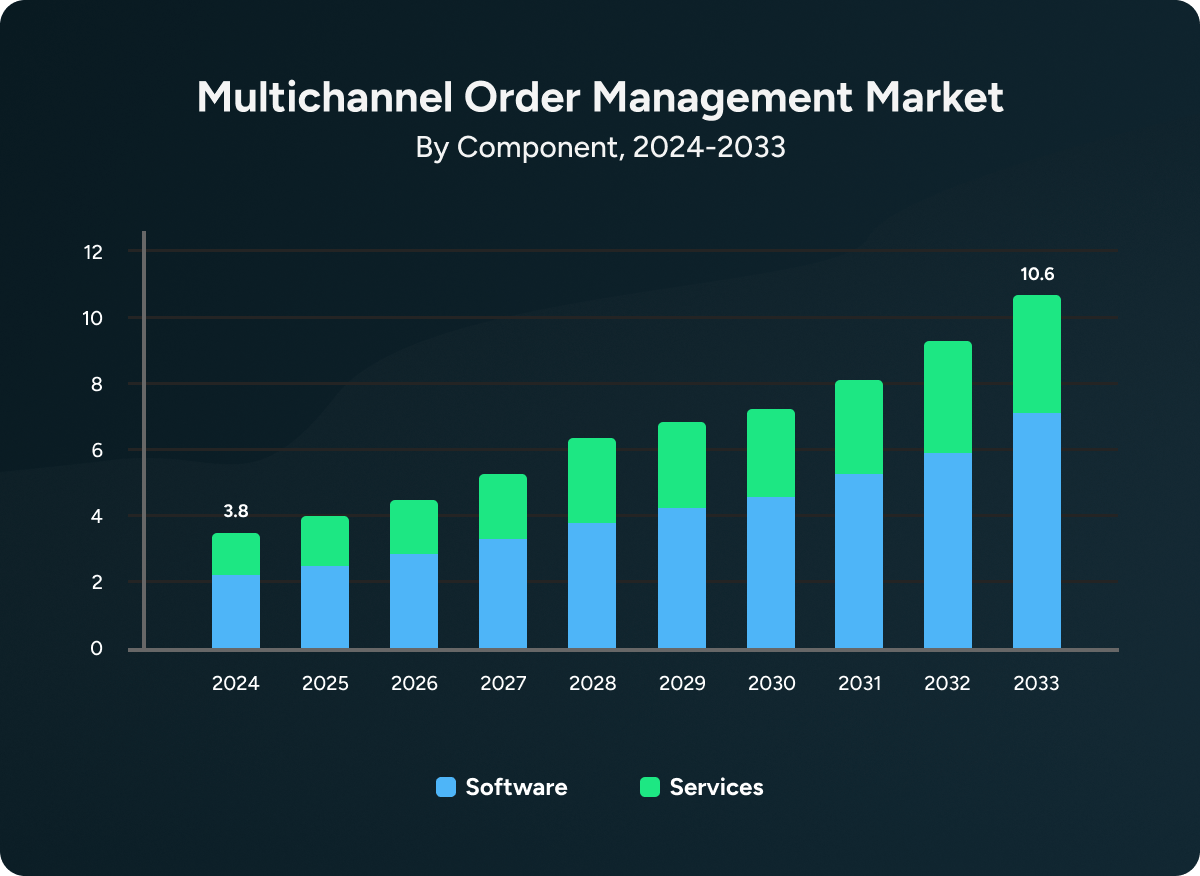
The multichannel order management market has experienced remarkable growth recently. In 2024, its global market value was estimated at USD 3.8 billion. Projections indicate this will reach USD 10.6 billion by 2033, growing at a CAGR of 12.0%.
While specific data for Saudi Arabia is limited, the Middle East and Africa region, with Saudi Arabia as a significant contributor, is witnessing increased adoption of multichannel order management solutions.
This trend is driven by the rapid growth of e-commerce and the retail sector in the region. Retailers are encouraged to sell products across multiple platforms to boost revenue. Implementing effective multichannel order management strategies is essential for accurate business management. Being aware of potential challenges is crucial for successful implementation.
Challenges of Multichannel Order Management
Selling across different channels is profitable but it can be hectic. You get to market and sell your products to the right audience on the right platform. But, keeping track of orders and sales on multiple platforms is a tedious task for any multichannel order manager. Below are some major challenges of multichannel order management that retail businesses have to face.
Difficulty in Inventory Management
The key to success when selling across multiple platforms is inventory planning. This includes inventory forecasting, keeping the optimal inventory levels, and displaying all your inventory online. Keeping the wrong inventory levels can increase inventory carrying costs and dead stock and lower your profit margins.
Moreover, you must be aware of your inventory levels and should know when it is changing in real-time. This will help you avoid dead stock and prevent overstocking. You need to distribute your inventory in such a manner that stock is always available in your multi-location stores and it should also be visible to online buyers.
Complexity in Order Fulfillment Processes
One of the major issues of multichannel order management is keeping track of SKUs. The process is more complicated when you are selling on multiple channels than on one platform.
The process of order fulfillment becomes complex as you may have to follow different methods for different channels. Also, retailers have to transit inventory between warehouses to effectively run their business. This is where you may lose track of your stock if you don’t have the right system.
Performance Insights on All Channels
For any business, data is crucial to making informed decisions on time. You can easily track and monitor the performance of one channel but managing more than two is tricky. You may have to look at Excel sheets for hours to find the right data. The situation only becomes worse when retailers have to explore data from online channels like Amazon.
Even if you hire skilled labor for reporting, you may not be able to make good decisions. Data that cannot show a clear picture of orders and sales is useless.
Pro Tip: Managing business on multiple platforms is tricky but you can avoid the complexities with a multichannel order management system. An all-in-one OMS allows you to process and manage orders in real-time by automating your entire workflow.
Essential Features of a Multi-Channel Order Management System
A multi-channel order management system is the right tool for a multi-location retail enterprise. However, before you invest in one, you must ensure that it can meet your business needs. We have listed some key features that a multichannel order management system should have.
Multi-Location Inventory Management
A multichannel OMS is of no use if it cannot show the collective inventory status of each location in one place. This means that the system should be seamlessly integrated with your multi-location warehouses. This way you can pick the nearby location for order fulfillment and see whether an out-of-stock product is available in another warehouse. It should also be able to sync the aggregated inventory of all the locations to all the sales channels so that you can reduce inventory carrying and avoid dead stock.
Native E-Commerce Integrations
Online integration is an essential feature that every multichannel OMS should have. This allows retailers to integrate all their online channels with offline stores. Thus, you will experience a seamless workflow and monitor the order fulfillment process on your website or other channels.
A good multi-channel inventory and order management system can integrate your business across various marketplaces including Amazon, eBay, Walmart, Shopify, Noon, Zid, Bigcommerce.
Flexible Order Fulfillment
The whole point of having an OMS is to automate the workflow. Get an order management system that can pick the warehouse or fulfillment method by itself depending on the order. This will enable you to fulfill and ship orders in the fastest and cheapest way possible.
POS Integration
An order management system that has or can easily be integrated with POS is the ideal choice for retail businesses. This will enable your customers to buy products seamlessly whether they are shopping online or in-store. Furthermore, you will be able to keep track of inventory and total orders placed in one system.
Data-Driven Inventory Planning
The right multichannel OMS will provide you with instant access to data for inventory planning. You can see high-selling items and slow-moving stock to make informed decisions.
Retail Accounting
A crucial part of order management is the analysis of post-purchase metrics. For this, retailers need real-time data on their sales, orders, and inventory. This is where the right OMS will come in handy and make the process easy for the multichannel order manager.
Need a Multichannel Order Management System?
See how PostEx’s all-in-one OMS can benefit your business
Book DemoBenefits of Multichannel Order Management Software
The perks and benefits of having a multichannel OMS are hard to overlook. Below are some main ways how multichannel order management software can boost your business.
Expanding Your Sales Platform
One of the biggest benefits of multichannel OMS is that it magnifies your sales and that too on multiple platforms. You can establish your eCommerce website, manage multi-location stores, and sync online and offline channels on one system. Moreover, it makes it easy for retailers to sell products across other marketplaces and e-commerce platforms like Amazon, Shopify, Noon, Zid, and Bigcommerce.
Maintaining Precise Stock Levels
The main challenge that businesses face while selling across multiple channels is keeping track of inventory levels. Many fail to maintain the stock levels only because they are unable to manage inventory or order data. Overselling of products on one or more locations creates a stock shortage which can easily be avoided through OMS.
A good multi-channel order management system diminishes inaccuracies by providing precise stock information. Retailers can measure inventory across multiple channels and keep track of orders and stock movement.
Accurate Order Fulfillment
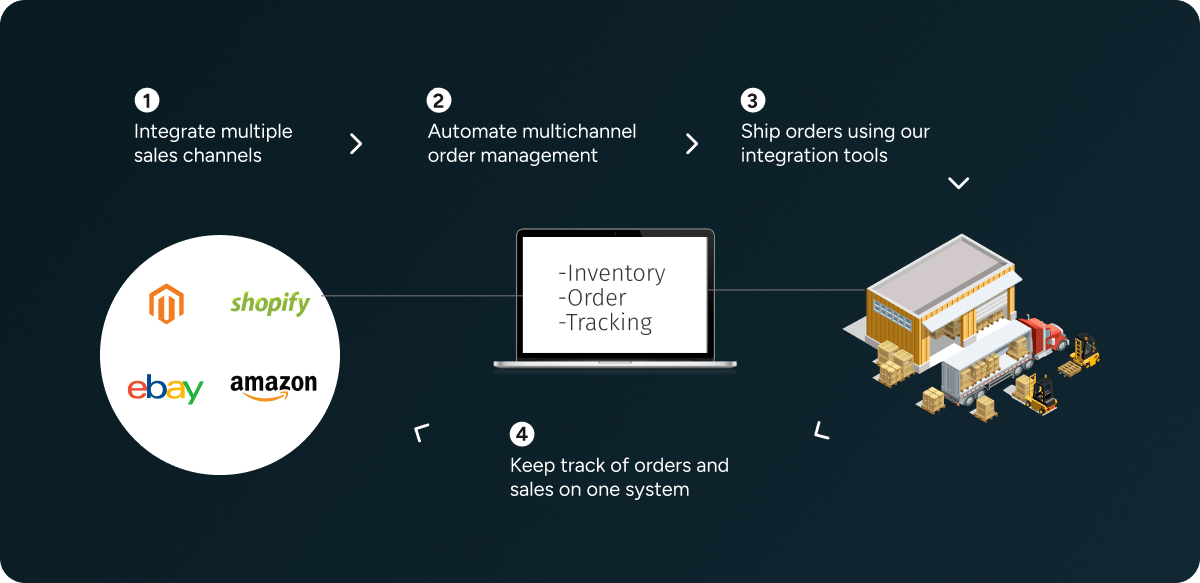
Fulfillment mistakes may happen when you are balancing orders across multiple channels. This can then lead to delayed shipments, wrong orders, and unhappy customers. Multichannel order management systems can reduce such risks by ensuring all orders are managed through a single platform. These systems have features and tools that can generate labels and help retailers mark orders. As a result, retailers can reduce fulfillment mistakes and get to offer a faster turnaround time.
Selling Based on Demographics
A multichannel order management system not only integrates different marketplaces but also provides useful insights. Based on the data, you can make informed decisions to market specific products on a specific channel to the right audience. By identifying sales trends and engagement time, you can run successful marketing campaigns.
Final Note
Multichannel order management is the key to digital transformation for retailers who want to sell across multiple platforms. It allows you to keep track of your inventory at different locations, sync your offline inventory online and automate your entire order management process.